
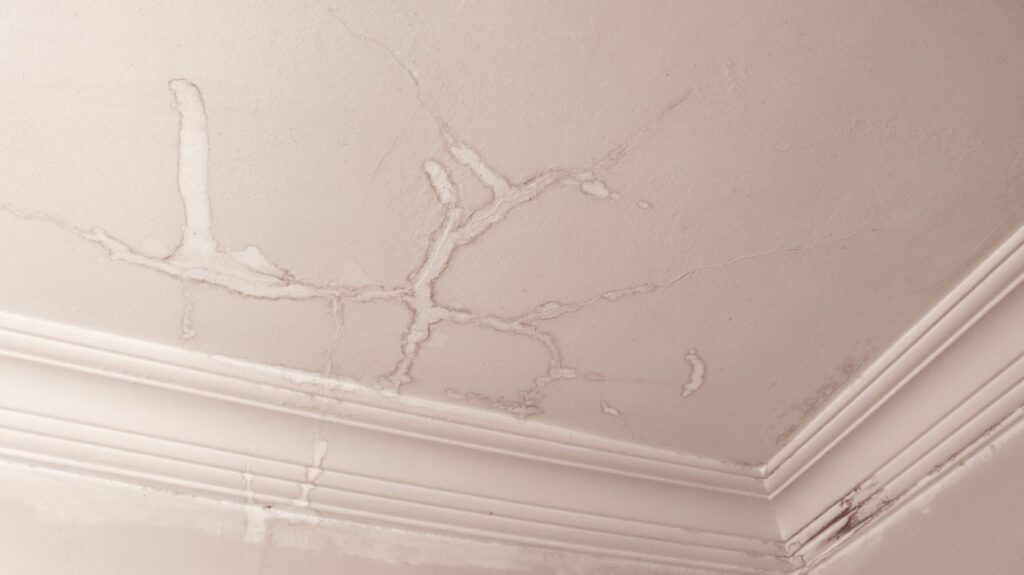
Water damage inside a home rarely appears all at once. In many cases, it begins with small, easy-to-overlook clues that gradually develop into larger problems. A faint stain on the ceiling, a slow drip during a rainstorm, or a section of drywall that feels slightly soft can all signal that moisture is present where it should not be. These early signs often indicate hidden leaks from plumbing failures, roofing issues, or moisture buildup within the structure.
Moisture trapped inside ceilings can weaken building materials and quietly spread behind walls or insulation if the issue is not addressed promptly. Acting early allows restoration professionals to locate the source of the problem and prevent further damage from spreading throughout the home. Recognizing these warning signs early can help homeowners avoid major structural damage, mold growth, and expensive repairs.
Water Stains or Discoloration on the Ceiling
One of the most recognizable indicators of ceiling water damage is discoloration. Water stains often appear as yellow, brown, or copper-toned rings on drywall or plaster ceilings. These stains may start small and gradually expand as moisture continues to enter the material.
Water stains typically form when water seeps through layers of building materials, carrying minerals or debris along. As the moisture dries, it leaves behind the discoloration homeowners often notice first. Common causes include leaking roofs, plumbing lines above the ceiling, or condensation from HVAC systems.
Even if a stain appears dry, it may still indicate an ongoing problem. Water damage rarely resolves on its own, and moisture can remain trapped inside materials long after the surface looks normal. Addressing the issue early helps prevent additional staining, material deterioration, and mold growth.
If a new stain appears or an existing one begins to grow, it is important to investigate the cause quickly. A professional inspection can help identify the source of the moisture and determine the appropriate restoration steps.
Active Dripping or Visible Moisture
In more severe cases, water damage becomes visible through active dripping or damp spots on the ceiling. Water droplets may form after rainfall, during plumbing use, or when snow melts on a roof. These situations indicate that moisture is actively entering the structure and should be addressed immediately.
Active leaks can occur for several reasons, including damaged roofing materials, cracked pipes, overflowing appliances, or blocked drainage systems. Once water enters the ceiling cavity, it can travel along beams or insulation before finally appearing elsewhere.
Visible dripping is often a sign that the ceiling materials are becoming saturated. Continued exposure to moisture can cause drywall to weaken, insulation to lose effectiveness, and wooden framing components to deteriorate.
When homeowners notice dripping water or persistent damp spots, professional water extraction and drying services are often necessary. Removing moisture quickly helps reduce the risk of structural damage and microbial growth within the ceiling space.
Bubbling or Peeling Paint
Another common sign of ceiling water damage is bubbling, cracking, or peeling paint. When moisture becomes trapped beneath the painted surface, it causes the paint layer to lose its adhesion. As a result, bubbles may form, or the paint may begin to separate from the drywall.
This issue often develops gradually. Homeowners may first notice small, raised areas resembling blisters in the paint. Over time, the paint may peel away entirely, exposing the drywall underneath.
Several conditions can lead to this type of damage. Plumbing leaks, roof issues, and high humidity levels can all introduce moisture into the ceiling. Bathrooms, kitchens, and laundry areas are particularly vulnerable because of the frequent presence of water and steam.
Although bubbling paint may appear to be a cosmetic problem, it usually signals that moisture is present behind the surface. Addressing the underlying cause quickly helps prevent more serious structural issues and reduces the likelihood of mold development.
Sagging or Soft Ceiling Materials
When a ceiling begins to sag or feel soft to the touch, water damage may already be advanced. Drywall and plaster lose strength when they absorb moisture, which can cause the material to bend or deform over time.
Sagging ceilings may appear uneven or develop noticeable dips between structural supports. In some situations, homeowners may also see bulging areas indicating water pooling above the ceiling.
These conditions can create safety concerns because saturated materials may eventually collapse if the weight of the trapped water becomes too great. Addressing the issue quickly helps prevent further structural damage and protects occupants’ safety.
Soft spots or sagging sections of a ceiling should always be evaluated by restoration professionals. Specialists can assess the severity of the damage, remove excess moisture, and repair or replace compromised materials as needed.
Musty Odors That Suggest Hidden Mold Growth
Sometimes the first sign of water damage is not visible at all. Instead, homeowners may notice a persistent musty odor coming from a particular room. This smell often develops when moisture remains trapped in building materials for extended periods.
Damp environments create ideal conditions for mold growth, particularly in ceilings where moisture may remain hidden. Mold can develop behind drywall, above ceiling tiles, or inside insulation where airflow is limited.
While a musty smell does not always guarantee mold growth, it is a strong indicator that moisture is present somewhere within the structure. Ignoring this warning sign can allow mold colonies to expand, affecting indoor air quality.
If unusual odors persist, professional moisture detection can help identify hidden leaks or damp areas. Addressing the moisture source and restoring affected materials helps prevent further microbial growth and supports a healthier indoor environment.
Professional Water Damage Restoration in Rancho Cucamonga, CA
Ceiling water damage may start with small warning signs, but it can quickly become a larger issue if ignored. Stains, dripping water, peeling paint, sagging materials, and musty odors all indicate that moisture may be present within the structure. Addressing these signs early helps prevent structural damage, mold growth, and costly repairs.
The restoration specialists at ExpeDry provide professional water damage restoration and moisture detection services in Rancho Cucamonga, CA. Our team uses advanced equipment and proven restoration techniques to locate hidden moisture, thoroughly dry affected areas, and restore safe indoor conditions.
If you notice any signs of water damage to the ceiling in your home, taking action quickly can help protect your property. Contact ExpeDry today to schedule an inspection or request restoration services in Rancho Cucamonga. Our experienced team is ready to help restore your home and bring peace of mind back to your living space.